

Every man is a little bit cat (the theory that men evolved from monkeys and guinea pigs is still just a hypothesis). Or, at the very least, a dog. There is no third option.
With dogs, everything is generally clear. The dog is man’s loyal friend and all those other clichés. But with cats, things are far more complicated. A cat is not exactly a pound of raisins!
A creature extremely delicate, timid, sensitive, sensual, mysterious, and amusing. Should we even mention that a man-cat sets his own rules, which must be strictly followed in dealing with him?
No, we shouldn’t. Every woman who has fallen into the paws of a gray-striped predator understands this almost immediately.
First of all, you must never restrict the cat in his desire to express affection and devotion to his mistress whenever he feels like it. Failure to understand this crucial fact in a cat’s life may lead to unprovoked aggression, silent sullenness, withdrawal, and the breakdown of the relationship.
Secondly, the cat must be fed on time and properly. And under no circumstances should you impose your own rules—say, insistently stuffing your pet with bean soup or scrambled eggs—if he prefers bloody steak or bologna sausage.
Remember that every cat has his favorite dish or treat. Your chances of winning his heart (many mistakenly believe this is easy), his mind, honor, and conscience will increase if you pamper him with something exotic, yet without presenting it pompously or ceremoniously, which offends the cat’s nervous and sensitive nature.
As in, “Look how much I love you, you little scoundrel, how I cherish and spoil you, and you don’t appreciate it!” (while smearing tears across your cheeks)? No accusations, no hints about how expensive he is to maintain! The cat has no intention of tolerating such behavior, which is utterly incompatible with his nature.
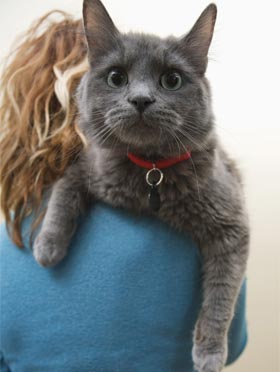 He is a proud, independent being who allows himself to be cared for—exclusively by those who deserve it. Proving that you are worthy of the cat, of his fickle favor and love, will be a constant, meticulous, hourly, daily, lifelong task.
Don’t forget that every “fluffy bundle” has his favorite spot, to which he quickly becomes attached—say, the armchair in front of the TV or a soft sofa. Never attempt to unilaterally change this spot or make significant alterations to its surroundings.
Cats are conservative creatures who, in contrast to all kinds of novelties, prefer the familiar—even if it’s outdated. Let that old thing be uncomfortable, shabby, and worn. For a cat, every little detail carries great, sometimes even global, significance.
For example, you’ve bought new kitchen curtains. It’s wise to consult the cat in advance: “Darling, which color do you prefer—green peas or melange?”
But remember: no bright colors or strong smells. The cat must feel safe and cozy, as if in a cradle or in his mother’s arms.
And finally, a few words about different cat breeds. Man-cats can be conditionally divided into three psychological types.
“Kisa”—a homebody, infinitely devoted and submissive creature who adores his “mama” and considers spoiling her mood the greatest misfortune in life. A melancholic, tender type, sometimes to the point of being cloying, yet loyal.
“Kotyara”—a rather sharp, scoundrelly creature who demands constant attention and care. An artistic temperament, prone to frequent hysterics and frequent trips to the left—which, of course, should not be encouraged, yet forbidding them is dangerous.
“Mur Murich”—a Siberian felt boot: lazy and fat. Sleeps in any position at any time of day, doesn’t catch mice, doesn’t go left, but is pleasant to warm up beside during cold weather. Likes simple, coarse food, undemanding in behavior, yet moderately affectionate. Excellent in rural or cottage settings.
Other character nuances depend on breed, place of residence, feeding, and care of your pet. Your cat’s appearance (if he is content, well-fed, his fur shining in the sun) tells those around you far more about you than about him.
Especially other cats!