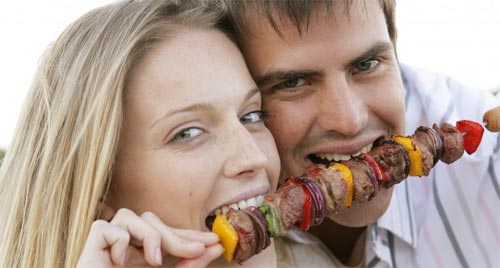
Shashlik, little shashlik—oh, how I crave it on a warm summer day, sitting in a cozy gazebo at the dacha, so much that saliva flows and an image forms: juicy pieces of meat exuding an incredible aroma, skewered on a metal rod.
And not only in summer—this dish is universally popular and beloved in any season, because it radiates a spirit of freedom and strength, spreading everywhere and making those nearby inhale its scent with good-natured envy.
So let’s stop pretending and fantasizing, and get straight to work.
“But there are so many ways to prepare shashlik—how do you choose?” you might ask. Indeed, there are countless methods, as recipes vary somewhat from country to country, but the essence remains the same: the meat must turn out tender and juicy, so you don’t have to chew it, choking and breaking your teeth, but instead savor its flavor and aroma. That is the truth of genuine shashlik. The author has tried many preparation methods, but particularly highlights one that is economical in cost and excellent in taste. I must emphasize right away: authentic Chimkent-style shashlik is made exclusively from lamb, and nothing else.
First, select the meat.
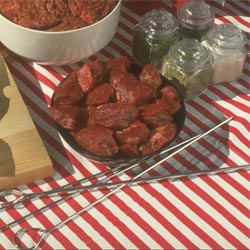
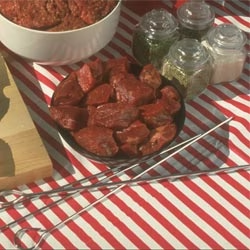
Preferably from a young lamb, but if unavailable, regular mutton will do—though in that case, the ratio of tail fat to meat should be approximately 50/50.
The most crucial step—marinating—without which you’ll end up with merely grilled lamb, not shashlik.
Take the meat and tail fat, cut them into long thick strips, then slice them crosswise into small squares. If the meat includes bones, cut the pieces directly from them.
A common mistake is cutting the lamb into overly large pieces. Such shashlik won’t marinate properly inside and will cook poorly over fire, turning out tough. But you shouldn’t cut it too small either, or all the fat will render out, leaving the meat dry and even partially burnt—which is simply unacceptable. Therefore, the pieces should be slightly larger than the thickness of an adult man’s thumb.
Once the meat is cut, place it in a deep container and pour in the marinade. Let’s pause here specifically: one could list many marinade variations, but nothing surpasses what the Sun has graciously given us—wine.
The wine can be either white or red, but white is better, with an alcohol content of at least 12%.
Under no circumstances should water get into the marinade, so after washing the meat, let it dry slightly.
Pour wine into the container. Mix the meat with finely chopped onion, red or black pepper (you’ll choose your preference with experience), coriander, salt to taste, a little diluted vinegar, and sugar. Place all of this into the wine so that it completely covers the shashlik semi-finished product. Press down from above with a weight—preferably a wooden lid with a weight placed on top, such as a pre-washed stone. If you don’t have a wooden press, a plate or enameled lid will work, but never use open metal or a metal lid.
Now leave it for some time in a cool place—not in heat or below freezing. Marinate for one to two days, and cover loosely with cloth to protect from insects.
That’s it—now all that’s left is to wait, in anticipation of the long-awaited feast.
Also worth mentioning are grills and firewood. No store-bought charcoal can replace karagach, saxaul, or acacia—trees that grow in Central Asia. But what if you live farther north? The advice is simple: the wood must be non-resinous, only dense hardwoods like oak. Birch can work too, but use only well-dried planks. Again, avoid resinous wood at all costs, or you’ll ruin everything.
Position the grill downwind if there’s a breeze; if not, prepare a piece of cardboard to fan the coals when needed, and a spray bottle filled with water.
Lastly, shashlik can be made entirely without vegetables—it won’t be worse—but then preparation requires a more delicate approach to avoid burning them.
Best are tomatoes and onions, sliced into rings. Other preferences may vary according to your taste. There are no strict limitations here.
Now everything is ready: firewood prepared, grill set up, and you’re practically drooling, ready to devour the delicacy as it is. But wait a little longer—you’ll see what wonderful shashlik you’ll achieve, with just a bit of patience and attention.
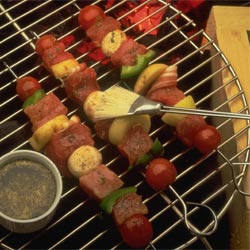
When skewering the meat, alternate it with fat, and if using vegetables, include them as well. Light the wood in the grill. I particularly recommend the most convenient method of arranging the wood: in a cone shape, forming what’s known as a wigwam. Place paper in the center, add kindling, and ignite. Once the wood has burned down, spread the embers evenly, ensuring there’s no open flame. Remove any unburned pieces from the grill and extinguish them thoroughly. Please, do not set a forest on fire—or anything else. But if you’ve chosen the right wood, this usually won’t be necessary.
Place the skewers on the grill, turning them occasionally, and watch carefully to prevent burning. The finished product is easy to identify by its pleasant aroma, while the fat turns light brown, sizzling and dripping emerald-green fat.
Occasionally spritz the shashlik with water to protect it from overcooking.
That’s all—now I’m ready to rush toward its fragrant aroma. What about you?
Approximate ingredient quantities by count and weight per 1 kg of meat and marinade:
- 4 large onions
- 2-3 teaspoons of coriander
- 1 teaspoon of pepper
- 1 teaspoon of salt
- 2-3 teaspoons of sugar
- 2-3 tablespoons of vinegar
And don’t forget flatbreads—your dish will be absolutely divine with them.
Also, separately slice onions into rings and place them in a shallow dish. Pour over a weak vinegar solution and nibble them with the flatbread.
Enjoy your meal!