


“Listen, you’re doing great! And I envy you with pure, white envy!” – probably, you’ve heard such a “compliment” at least once in your life. For some reason, white envy is considered a noble emotion. No one would ever say, “I envy you with black envy,” even if that might actually be the bitter truth.
The black-and-white palette of envy involuntarily evokes associations with magic. There, too, everything is in two tones. Envy, as is known, is one of the seven deadly sins. Magic has never belonged to godly pursuits either. It’s quite possible they are indeed closely intertwined, since people turn to magicians clearly not out of a desire to do good for their neighbor. Even in requests to return a lover or remove a curse, one can find a hidden “envious” subtext directed at a rival or at those whose lives seem to go smoothly and harmoniously, unlike the one “afflicted by misfortune.”
In the color spectrum of envy definitions, there are many other shades. We often hear expressions like “turned red with envy,” “turned green with envy,” or “turned yellow.” In Latin, envy was denoted by the word “livor,” a synonym for the concept of “blue.” The Chinese say about envious people: “Their eyes are red.”
Why do feelings of envy receive color characteristics at all? Take the seven deadly sins: none of them have ever been expressed “in color.” We don’t say “black greed,” “white pride,” or “blue despair.” Envy is directly linked to visual perception. Envy usually arises from what one sees. Hence the concept of the “evil eye” (the evil glance).
According to psychologists, there are six main types of envy—and therefore six “colors.” Almost like a rainbow. Though the resulting spectrum is quite different.

Yellow envy. Its objects are material well-being, income, and living conditions. For example, you might envy your neighbor because she owns two mink coats while you have only one rabbit fur coat. Or your classmate Vitya, who upgrades his foreign car every year, while you haven’t been able to replace your used “seven” for many years. Or your son feels frustrated because Genka from the parallel class has a high-end mobile phone, while you’re unable to buy your child the same model. All this is openly material yellow envy.
Perhaps you yourself possess values inaccessible to others, and then all envious glances will be directed at you. Fighting this type of envy is futile; it’s better not to flaunt your wealth and prosperity, not boast endlessly about expensive purchases, so that your close ones don’t shift from being your best friends to becoming envious rivals due to feelings of personal inadequacy.
Red envy. This is also called social envy. It often manifests from older generations, sometimes even from parents toward their children, toward “the youth.” Moralizing statements like “Back in our day…” often serve as its indicators. Most elderly people believe that it was their hands that laid the foundation for their descendants’ prosperity, and that the younger generation now lives too freely. Explaining that every era has its own difficulties and challenges is sometimes pointless: they won’t empathize and will remain convinced of their own view.
To prevent red envy from poisoning our lives and damaging relationships with loved ones, it’s enough to know its secret: unlike other types of envy, it can be successfully treated. Simply pay attention to elderly people, don’t withhold compliments about their wisdom and life experience, and take the opportunity to ask their advice on various matters—even if you already know what to do.
Pink envy. This comes straight from the timeless opera “Oh, girls!” or whatever it’s called. Generally about the idea that female friendship doesn’t exist. Remember how much suffering various Cinderellas and Nastias endured in fairy tales, even from their own sisters—both step-sisters and biological ones? Real life sometimes produces illustrations that even fairy tale writers couldn’t dream of.
Female rivalry, whether hidden or overt, according to psychologists, arises primarily in the struggle for attention from the opposite sex. And of course, every woman dreams of getting the best specimen. But even if she does get him, she’ll still feel that her sister’s, friend’s, or coworker’s husband is incomparably better: “And why did such happiness fall to that whiner? She herself—nothing to look at: no skin, no face, no intelligence, no imagination…” That’s how we live.
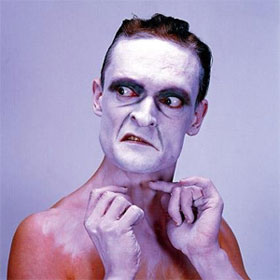 Blue envy – with a masculine character. Compared to it, female envy is just pink little flowers. Male envy manifests in two forms. The first we’ll conditionally call “cockfighting.” This is when a man envies a more successful rival—no matter in what: business or love. It’s often male “rooster” envy that leads to tragic consequences. For examples, we can turn again to fairy tales: envious brothers chopped Ivan into pieces to claim his achievements; malicious old kings executed young servants so they wouldn’t turn their fiancées’ heads.
The motto of the second form of blue envy: “A hen is not a bird!” You understood correctly—this is when a man envies a woman. Think it’s rare? It’s actually widespread! It can even flourish within a family where he is a chronic failure, while she is suddenly independent, capable, and promising. And since a man by nature is a leader, he’s unlikely to calmly accept your sudden independence and potential.
At home, at best, he’ll periodically start scandals because you oversalted the borscht or didn’t screw the toothpaste tube cap all the way. At work, he’ll spread dirty rumors about you. And goodbye, future promotion. Hello, damaged reputation. Paradoxically, women rarely envy successful men—neither colleagues nor especially their husbands, accepting their success as natural.
Finally, the classic forms of envy – white and black. We’ve already mentioned them briefly at the beginning of the article; we’ll just add a few words. White envy is a myth, a dream envy. It’s assumed that the envious person feels no irritation toward you, but simply wants to achieve independently what you’ve already attained. You, supposedly, are their role model. But in reality, this happens very rarely.
If a person is intelligent enough not to express their envy through inappropriate actions or spiteful remarks—they already deserve honor, praise, and a white halo. But then again, try expressing “positive” envy, say, to a colleague recently promoted to a leadership position: “I want to match you in every way,” and so on. Most likely, after such confessions, they’ll decide you’re plotting to undermine them.
Black envy – a pathology beyond comment. If it doesn’t cause all human misfortunes, it’s certainly the root of all criminal tendencies.
There is an illustrative old fairy tale. God said to a man: “Ask for whatever you want—I will fulfill any of your desires. But on the condition that I will give your neighbor twice as much of these blessings.” The man thought long and hard, and finally asked: “Lord, pluck out one of my eyes!” So think for yourselves, which color of envy was at work in him.