

Even geniuses can make mistakes. Famous scientists and Nobel laureates sometimes said foolish things. We present to you ten mistakes made by brilliant scientists from all times and nations.
Nikola Tesla’s First Flight
Nikola Tesla is, without any doubt, one of the greatest scientists in all of human history. His experiments determined the development of science for decades to come; to a large extent, it is thanks to Tesla that we can enjoy the fruits of scientific and technological progress, although his contemporaries considered the great scientist an eccentric, if not insane. In his later years, Nikola Tesla was developing intricate devices like an earthquake generator or an apparatus that created so-called death rays, which only fueled rumors about his madness. The genius conducted numerous experiments, but one of the funniest ones he had to experience in childhood, though it nearly became his last for the future light of scientific thought.
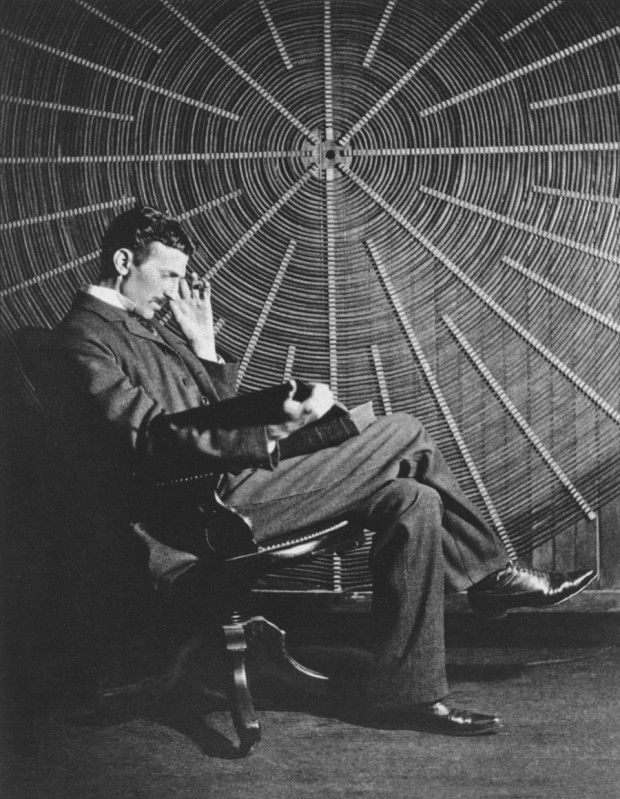
Once, young Nikola noticed that after a few minutes of hyperventilation (i.e., intense breathing during which a lot of oxygen enters the lungs) he felt an unusual lightness—the boy thought he could literally soar in the air. The experimenter decided to test whether he could overcome gravity through hyperventilation. Taking an umbrella, Tesla climbed onto the roof of a shed, began breathing deeply until he felt dizzy, and jumped down. Needless to say, his flight was short—upon hitting the ground, Nikola lost consciousness, and some time later, his frightened mother found the boy. For the next few weeks, the future genius was practically under house arrest.
Thomas Edison’s Architectural Ambitions
In 1877, Thomas Edison, Tesla’s contemporary and incidentally his main rival in scientific research, discovered deposits of black magnetic sand containing iron ore near Long Island. Pursuing the idea of developing these deposits, the eminent physicist spent several years devising various methods for extracting iron from the local sand. Edison patented several technologies, but none yielded the desired results. American newspapers, as we would say now, actively “trolled” the scientist, calling all his efforts “foolishness.”
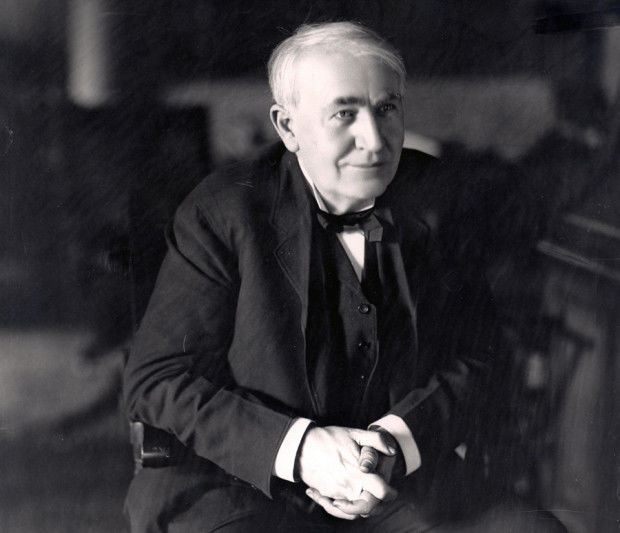
To prove the promise of his research to everyone, the physicist funded his own company to process the iron ore, but his venture failed spectacularly: not only were the extraction methods inefficient—several workers died when one of the industrial buildings collapsed, forcing the development of the deposits to be halted.
Soon, Edison became fascinated with the idea of widely using a new (at the time) material called concrete in construction. The scientist believed that concrete could be used to cast not only building materials but also building frames, furniture items, and the bodies of musical instruments, such as pianos. The physicist claimed that his technology would drastically reduce the cost of housing; he even found a businessman willing to invest substantial funds in the project. Like the iron ore development, his “concrete dreams” collapsed—each house built using the revolutionary technology required the creation of dozens of molds into which the solution had to be poured, significantly increasing the cost of such construction. Eleven residential houses were built using Edison’s technology, but they never found buyers.
Einstein’s Eternal Universe
Albert Einstein’s contribution to the development of science is hard to overestimate—in his works, the scientist formulated the main principles of the physical model of the surrounding world, which is still used in modern physics as one of the fundamental ones. However, despite all his merits and outstanding achievements, the brilliant physicist, like any other person, sometimes made mistakes in his assumptions. One of his major errors is considered to be the postulate that the Universe would exist forever.
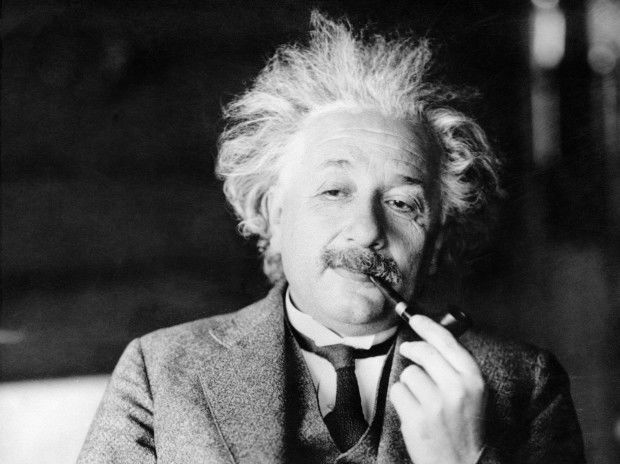
Albert Einstein believed that the life path of the Universe was infinite, although during his lifetime, the Big Bang theory began gaining popularity, according to which the Universe would eventually cease to exist. During a meeting with one of the theory’s authors, the Belgian priest and mathematician Georges Lemaître, Albert even had the audacity to state: “Your calculations are correct, but your understanding of physics is abominable.”
In the 1930s, Einstein worked on his own model of the Universe’s structure—one of the great scientist’s previously unknown manuscripts, discovered recently, contains scientific calculations similar to the steady-state theory of the universe developed in the 1940s as an alternative to the Big Bang theory.
Fred Hoyle’s Steady-State Theory
Einstein was not the only opponent of the Big Bang theory—British astronomer Sir Fred Hoyle also viewed this concept with distrust. Hoyle is known as the creator of the steady-state theory of the universe, which largely coincides with Einstein’s erroneous ideas about the cosmos.
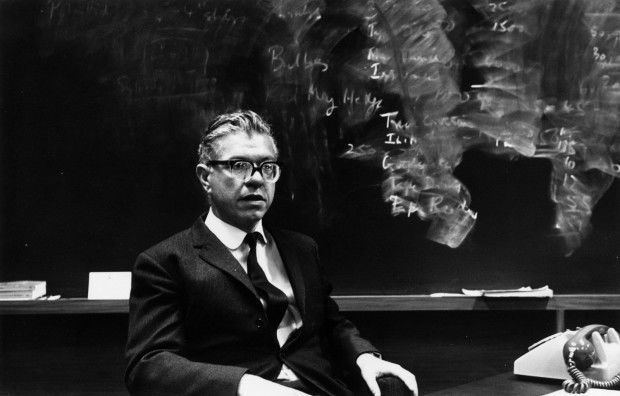
Fred was undoubtedly one of the most outstanding scientists of his time—his research shed light on star formation and the nuclear processes occurring within them. However, by becoming engrossed in the idea of a steady-state universe, the Briton thoroughly tarnished his reputation in scientific circles.
Hoyle organized public lectures, trying to convey his views to the general public, but he primarily appealed to the listeners’ emotions, providing no facts in favor of the steady-state theory. It was Hoyle who coined the term “Big Bang theory”—in the scientist’s opinion, this phrase was meant to discredit the ideas of his scientific opponents, but the opposite happened—the theory with such a resonant name found more and more supporters, while Hoyle’s ideas remained just that, ideas that did not gain scientific traction. Ultimately, physicists proved the fallacy of Hoyle’s theory, so now it has only historical value.
Benjamin Franklin’s Electric Turkey
Many of you have probably seen $100 bills, and some might even recall that they feature Benjamin Franklin—a famous political figure, writer, scientist, and inventor. This extraordinary person was actively interested in the achievements of scientific and technological progress and conducted numerous experiments with electricity. Among them were studies on the effects of electric current on animals—had Franklin practiced such things today, his portrait would likely not have appeared on one of the world’s most popular banknotes.
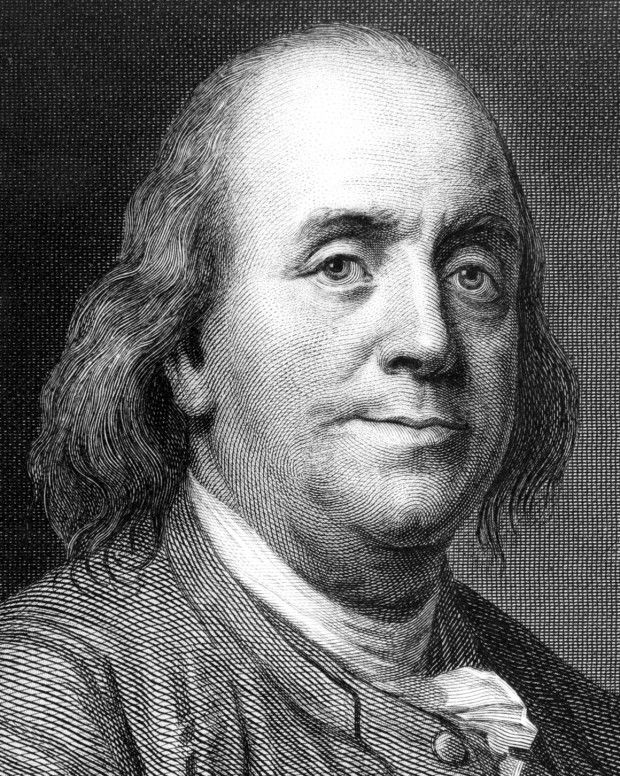
During his research, Franklin discovered that electricity could be used in cooking, after which he organized a series of parties featuring the demonstrative “execution” of a turkey by electric current. One such scientific-educational gathering nearly killed the dedicated experimenter—while trying to finish off another bird, Franklin received a powerful electric shock and lost consciousness, terrifying the guests to death. Fortunately, the shock was not fatal, and the scientist soon regained consciousness; the fate of the turkey remains unrecorded by history.
Edwin Hubble’s Young Universe
Edwin Hubble is one of the founders of modern astronomy. Before him, humanity was limited to timid assumptions and vague concepts about the structure of the cosmos, but with Hubble’s arrival in astronomy, everything changed radically. The scientist proved that the surrounding world is not limited to the Milky Way, that our galaxy is a tiny part of an incredibly vast Universe that is also constantly expanding.
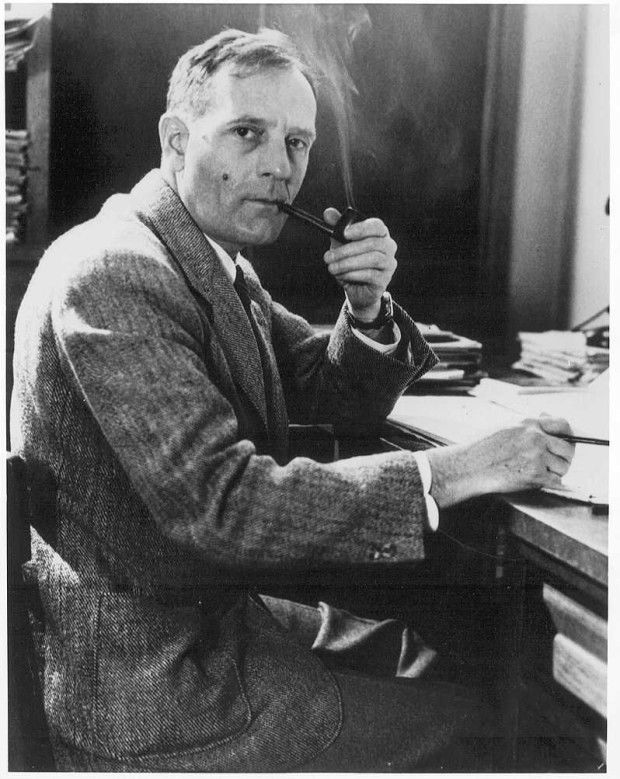
Hubble’s contributions to modern science are truly invaluable, yet at least in one major aspect the great scientist was mistaken — in 1929, while attempting to calculate the age of the Universe, the astronomer concluded that it appeared approximately 2 billion years ago. However, a few years later physicists calculated the approximate age of the Earth — between 3 and 5 billion years — forcing Hubble to acknowledge the error in his calculations.
Linus Pauling’s Triple Helix
One could speak for hours about the scientific achievements of the famous American scientist Linus Pauling, but to understand the value of the chemist’s work, it suffices to note that Pauling received two Nobel Prizes (in chemistry and the peace prize).
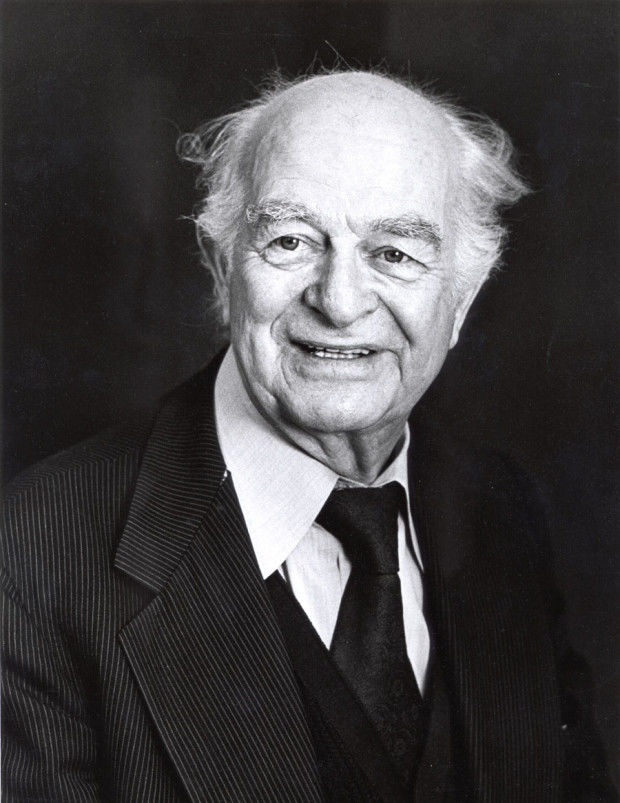
In the 1950s, Pauling was developing a model of DNA structure; similar research was being conducted at the time by two other eminent scientists — Francis Crick and James Watson. As a result, they received the Nobel Prize for their double helix DNA model, which is now recognized as correct by the entire scientific community without exception.
Upon familiarizing himself with the results of their work, Pauling realized he had been wrong. His own concept involved a triple helix, and this was not a case where one could say: “One more nucleotide chain, one less — what’s the difference?”.
Charles Darwin and Heredity
The works of Charles Darwin brought about a true revolution in science; his theory of the origin of species did not immediately gain widespread recognition, but it is currently used as the primary model for the evolutionary development of life on our planet, although despite the foresight of Darwin’s conclusions, his ideas were not without flaws.
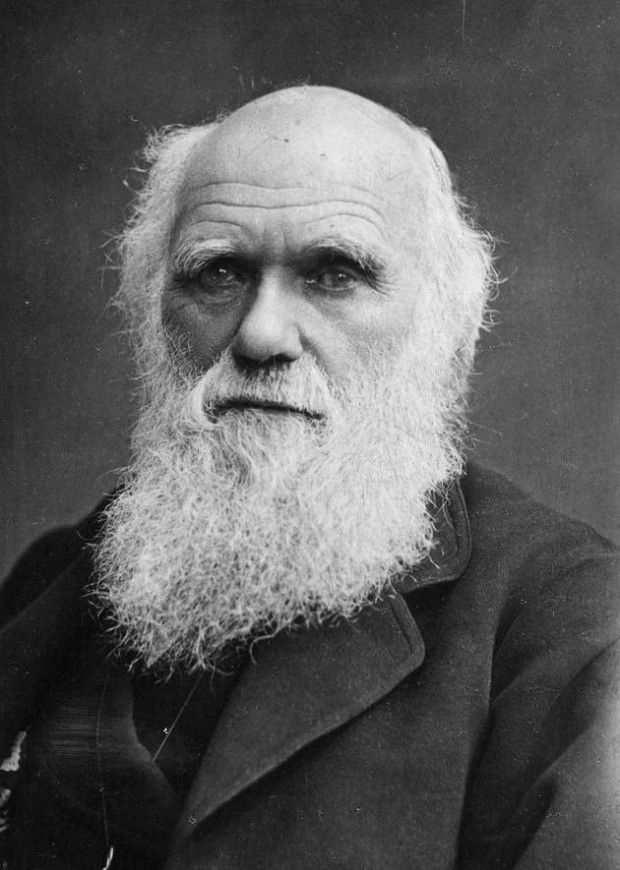
In Darwin’s time, people had very vague notions about the inheritance of genetic traits; for instance, most physicians in the 19th century believed that genes were passed from generation to generation through blood. Darwin believed that in every son, the genetic traits of both parents combined chaotically, yet according to his own theory of evolution, it should not be random traits that are transmitted, but dominant ones — that is, clearly expressed traits that promote the improved survival of the species — a contradiction that is obvious. If Darwin’s assumption about inheritance had been correct, evolution would have reached a dead end long before the appearance of humans, but even knowing about the diversity of life forms on Earth, which is only possible with selective transmission of genetic traits, the scientist stubbornly refused to acknowledge his error.
Galileo’s Theory of Tides
Galileo Galilei was never afraid of criticism, even when he knew his ideas would be grounds for attacks and ridicule from representatives of orthodox science and the Church. The researcher’s dedication in defending his scientific views has long been proverbial; during his lifetime he was forced to renounce some of his assertions under threat of death, but later the Catholic Church acknowledged the scientist’s correctness, though this happened three and a half centuries after his death.
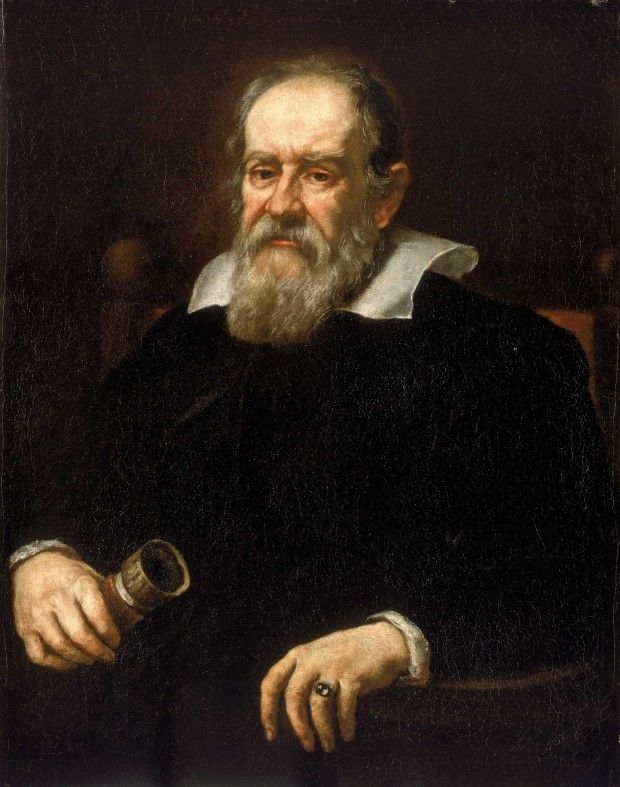
Without diminishing Galileo’s contributions to world science, it is worth noting that one of the great thinker’s assumptions did not receive scientific confirmation. Galileo attempted to explain the tides of Earth’s seas by the rotation of the Earth around the Sun, but the scientist was never able to obtain evidence for this idea — simply because it did not exist in reality. Interestingly, Galileo was aware of the hypothesis of the German scientist Johannes Kepler, who explained tides by the gravitational pull of the Moon and the Sun, but considered his concept “frivolous”.
Isaac Newton’s Error
Isaac Newton’s “Mathematical Principles of Natural Philosophy” is considered one of the greatest scientific works, a fact confirmed by thousands of references to the outstanding work of the brilliant British scientist. For three hundred years, Newton’s work has been among the most cited monographs in the history of science, which makes it all the more astonishing that all this time the “Principia” contained an elementary mathematical error that until recently no one had noticed.
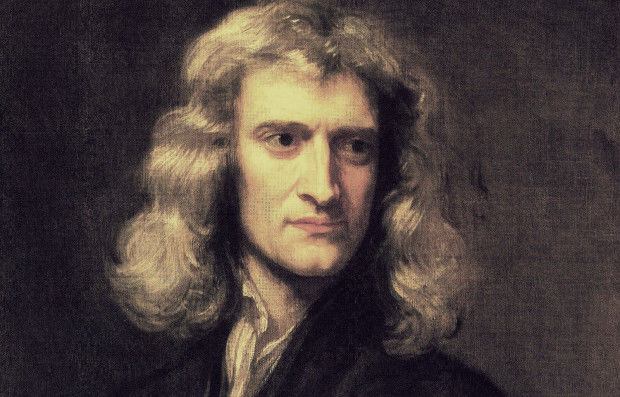
In one of the sections of the “Principia,” Newton provides a formula for calculating the mass of known planets, which, among other things, uses the value of an angle formed by two specific lines. In some calculations Newton works with an angle of 11 arcseconds, while in another part of these computations he uses an angle of 10.5 seconds.
The error is of a formal nature and in no way diminishes the value of Newton’s scientific expositions, yet it remains unclear how thousands of people who over hundreds of years studied the work of the Briton (among them were truly great minds) managed to overlook this “typographical error”? The error was recently discovered by a 23-year-old student named Robert Garisto, who will likely boast to his grandchildren that he surpassed Newton himself — if not in scientific achievements, then at least in attentiveness.