
We hide our emotions and true feelings toward a particular person. But do we really need to know the whole truth? It’s a complicated question. Most people answer that bitter truth is better than sweet lies. Yet, according to research, the average person lies three times in every 10 minutes of conversation. We are all so contradictory—we want the truth, yet we lie for no reason. And we really want to understand how we can read other people’s thoughts through their facial expressions and gestures.
The truth is written on our faces! This is what scientists and neuro-linguistic psychologists claim. In America, they even made a TV series called “Lie to Me.” Its main character is a psychologist-scientist played by Tim Roth. He solves complex crimes by detecting lies through facial expressions and body language, determining whether someone is telling the truth and what they truly feel. Currently, the series is wildly popular in America and is widely watched online here as well—largely because it provides detailed, illustrated analysis of what specific gestures or facial movements mean. We’ve carefully watched the show, compared it with scientific data, consulted experts, and today we’ll tell you how to catch a liar red-handed.
What gives us away?
Lying is a certain type of stress. It triggers physiological reactions, which scientists classify as “lying markers.” So far, there aren’t that many of them—after all, people, let’s admit it, are good at lying. This skill, by the way, is best developed in those who were popular in school. Although in the series “Lie to Me,” the main character, a quirky self-taught genius, says: “There are only 43 muscles in the face and 10,000 possible expressions! Learn them all, and you won’t need a lie detector!”
But try memorizing them all. For example, African aborigines don’t bother with this at all. They have their own lie detector—an ostrich egg. The person answering a question holds the egg in their hands. If they lie, the egg cracks. They involuntarily squeeze it a bit tighter, and the shell can’t withstand the pressure. And people cannot control the micro-contractions of their hand muscles.

For us, it’s more complicated. It’s known that women detect lies better than men. Brain scans of both sexes show that women, on average, have between 13 and 16 key zones in both brain hemispheres involved in communication and used to analyze words, tone of voice, and body signals. Men, although they lie more, have only 4 to 7 such zones. How did this happen? The male brain is designed to solve spatial and strategic tasks. The female brain, on the other hand, evolved for communication—after all, women need to raise children and must understand from the smallest cues whether a child is hungry, sick, etc. Many women can even read animals’ emotions and know what a surprised cat or an irritated dog looks like. Men, on the other hand, are unlikely to tell the difference. Evolutionists explain that a man’s role was to catch prey, not to have deep conversations with it. Although times have changed. Modern men have to talk to their “prey” to their own advantage, while women now need to learn how to hunt.
Why do we lie?
Often, we don’t exactly lie—we just say something different from what we think, or we omit information. Lies can be for good, for protection, out of tact, or due to diplomatic necessity. It’s believed that if you always told the truth, you’d have no friends, no job, and no relationships. But is there such a thing as one absolute truth? Often, everyone has their own version. As early as the 19th century, von Neumann proposed abandoning black-and-white thinking, where there’s only “yes” or “no,” only lies or only truth. Intermediate states exist. This type of thinking is called three-valued logic, where the same situation appears differently in different contexts. Don’t forget this. For example, Paul Ekman, author of the book “Telling Lies,” claims that there’s practically no single 100% indicator of lying. Analyze comprehensively, based on the situation and the person. But still, objective signs of dishonesty do exist. How can you recognize them?
What can reveal…
The eyes
When a person confidently wants to defend their lie and lies consciously, they try to maintain strong eye contact. They stare intently into your eyes—to see whether you believe their lie. But when someone is caught off guard and wants to lie so that no one remembers it, they immediately shift your attention: they go into another room on some pretext, start tying their shoes, shuffling papers, muttering something under their breath. However, sometimes a person looks into your eyes hoping to see support. They may not be lying, but simply feel very uncertain about being right.
When asking questions, watch the eyes as the person answers. Generally, if they look to the side, it means they’re recalling something to tell the truth. The direction matters. Look at the diagram by neuro-linguistic psychologists showing what eye movements indicate.
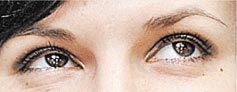 Up and to the right – recalling a visual memory of real events or images, i.e., something they actually saw.
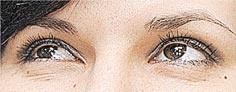 Up and to the left – imagining or fabricating a visual image, possibly false.
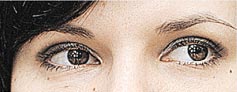 Straight to the right – recalling an actual sound or auditory memory.
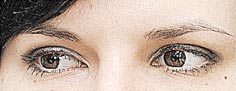 Straight to the left – making up words, searching for how something could sound better—they didn’t hear it themselves.
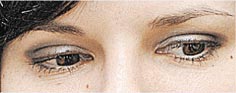 Down and to the right – saying something they are confident about.
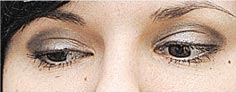 Down and to the left – recalling real tactile sensations, smells, or tastes.
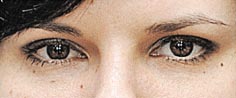 Straight ahead – listening attentively, processing information.
Pay attention to blinking. When lying, people often blink involuntarily due to stress. However, increased blinking can also mean the topic is unpleasant or painful. The less someone blinks, the happier they are at that moment.
…the body…
One-sided movements—when only one side of the body (shoulder, arm, leg) is very active—indicate that the person is saying the opposite of what they think. In general, if someone twitches one shoulder, they’re revealing a lie.
Taking a step backward while speaking—they don’t believe what they’re saying, they’re retreating.
If a liar suddenly feels they’ve given themselves away, they immediately start closely monitoring their facial expressions, speaking more slowly than usual, carefully choosing words… And it’s precisely this body language that can expose them. Even if they appear relaxed and playful, their body remains tense and is in an unnatural or uncomfortable position. For example, legs crossed tightly, hands trying to be folded or hidden—there’s something they’re concealing from you.
…the face and lips…
A person expresses sympathy, yet the corners of their lips tremble, as if trying to lift upward. In reality, they’re somehow pleased by the event but want to hide their joy. The corners of the lips may also tremble or tense when someone is happy they’ve successfully deceived another person.
Pressing the lower lip inward—they’re unsure of their words, there’s inner conflict between words and actions. For example, they say, “Yes, I’ll call you back tomorrow,” but have no intention of calling.
An asymmetrical facial expression, a smile distorted to one side—this means the person is faking an emotion. Some psychologists consider facial asymmetry during conversation a 100% confirmation that the person is lying.
Tilting the chin upward—they feel inner anger and resentment toward you, no matter how pleasantly they behave on the surface.
Know this: surprise lasting longer than 5 seconds is fake. If someone is trying too hard to appear surprised, it means they already knew about it.
…the hands
People touch their neck when lying or when very nervous. No wonder in films men, upon receiving some terribly important news, want to loosen their tie. And when a person seems to be holding their throat, they are literally afraid of letting something slip out. For example, confessing love or not saying something too bold to their boss. The words seem stuck in their throat, and they are holding them back.
Hands clasped together like a lock – this means hiding something and holding oneself back to avoid revealing a secret. If a person tries to hide their hands, puts them in pockets, or crosses them over the chest, they are most likely lying.
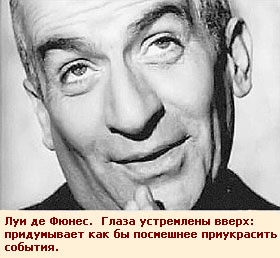
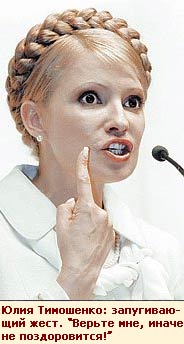
In general, pay attention to the fingers. For example, the well-known gesture of the “index finger pointing upward,” which seems to say, “Now I’ll show you how it’s done!” actually means: “Now I’ll scare you into believing me.” In films, this is claimed to be a signal of fabricated lies. But psychologists interpret this gesture ambiguously. A person might simply be threatening, knowing they won’t actually carry out the threat. It’s like threatening your son with a belt, knowing you won’t hit him.
Stroking oneself with the fingers – this is a liar’s self-soothing gesture. They want to encourage themselves, fearing that they aren’t believed.
At the end of negotiations, the tradition of shaking hands is not accidental. If your interlocutor has cold hands, they might fear being exposed. Although in some people, this is simply due to poor circulation.
Linguistic signs of lying
If a person deliberately refers to someone as “that man” or “that woman,” know that this is called distancing language. They are creating artificial distance, reducing the significance of the subject. Why? For example, to conceal an acquaintance or a close relationship.
If you doubt the truthfulness, ask them to retell the same events in reverse order. If it’s true, this isn’t difficult. But if they lied, it’s hard to recall the sequence of lies and reverse it.
If the story contains too many details and unnecessary minutiae, the person might be trying to demonstrate that they are seemingly completely open, as if saying, “Look, I’m revealing all my cards.” This is a clear symptom of deception.
A common technique – half-truths. This method is usually used by women. They always want to share what’s happening in their lives, even wishing to be honest girls, as they were taught in childhood. Therefore, they partially tell the truth, but lie about the rest in a way convenient for them.
Pay attention to disclaimers. Grandpa Freud made a name for himself on this. Because he was right: disclaimers expose liars. (Recall the operetta “The Bat,” where a man tells his wife about a hunting trip and a dog named Emma.) Vagueness in speech is a sign of wanting to lie without being noticed.
A person who lies as easily as breathing is exposed by heightened distrustfulness. We all judge others by ourselves. And if a person readily believes everything, it means they themselves usually don’t lie. This is based on a psychological mechanism called projection. We always project our own traits onto others in one way or another.
If the word “just” frequently appears in speech, the person feels guilty about something and is trying to justify themselves.
Voice pitch rises when a person lies. In sadness and sorrow, voice pitch drops.
Lies lead to more lies. Start clarifying details, asking questions around and around, and a liar will soon expose themselves through increased nervousness. But first, ask yourself: do you really want to know this truth? As one famous writer said: “Don’t ask a question if you don’t know what you’ll do with the answer.” And in any case, none of these signs is a final verdict. They are merely signals that justify caution, but not condemnation.

Interesting fact
If you or your topic strongly appeal to someone, their pupils noticeably dilate. Scientists have calculated that when looking at something pleasant, your pupil enlarges by 45%.
How not to become a victim of deception
– Sit on a higher chair or simply stand above your interlocutor. Higher physical position subconsciously acts as an intimidation signal.
– Adopt an open posture – do not cross your arms or legs.
– Invade their personal space – move as close as possible to the speaker.
– Mirror their posture and gestures. This builds trust, making it harder for the liar to deceive.
– Stay calm and control your emotions. People often lie to avoid negative emotional reactions.
– Do not expose or accuse. Instead, pretend you didn’t hear clearly and ask again. This gives the liar a chance to correct themselves and tell the truth.
Signals of sincerity
Wrinkles around the eyes when smiling – a genuine smile. With a fake smile, only the lips move.
If the story has gaps, imprecise details, spontaneous corrections, or backtracking like “Ah, no, I remembered, the car was white!” – these are signs of a truthful account.
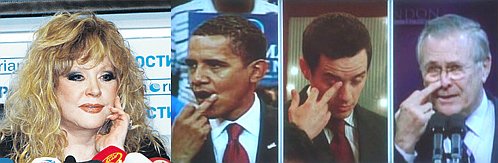
A person rubs their face with the middle finger – a silent gesture of sending the interlocutor away, a sign of hostility. Alla Pugacheva at the end of her last press conference, Barack Obama during debates, an actor from the series, Donald Rumsfeld, former U.S. Secretary of Defense.