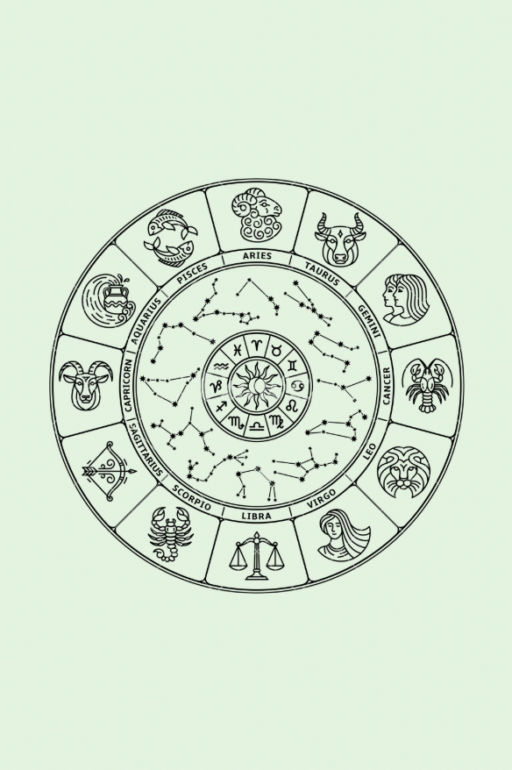


Sun in Pisces
Het Monster: Sun in Pisces Two Fish live in my ocean of deep feeling: Sweet dreams is one, and compassion is the other. I will leave no one in distress, I will care for everyone. Do you see the two little fish swimming in different directions? One is happy, and the other is shedding tears. Your little Pisces has a very sensitive and emotional soul, often overwhelmed by uncertainty: which way to turn? One reason for this is their innate ability to absorb signals—moods, emotions—from everyone around them, like a tiny sea sponge. Some of these signals are contradictory. Life is full of conflicts, and Pisces do not cope well with them. If others are sad, angry, or unhappy, your child will struggle not to share their feelings. Their own emotions are easily wounded, and if that happens, tears flow easily, no matter how hard they try to hold them back. If you are a more objective type of person, dealing with the sensitivity of little Fish may not be easy for you, but understand that it is not a flaw. This is empathy, an exceptional understanding of others’ needs. You should gradually teach such a child some techniques of separation—how to distinguish their own feelings from those of others and understand that they are not responsible for them. Your child will show a heightened willingness to help others. In fact, they may need to feel needed to sense their own worth. “Ah, Mom’s little helper!” you might think. And not without reason if they sense that you truly need it. But more likely, they will ask for your support in helping fallen nestlings, injured animals, or an unfortunate classmate they choose as their special friend. They will be compassionate, merciful, and always ready to assist. They are likely to be drawn to a spiritual path and may become deeply religious. If you nurture these undoubtedly positive traits, they may later choose professions related to health or providing aid to others. But even if they become a military officer, they will be known and respected for their caring attitude toward subordinates. A possible downside of this empathy is that Pisces, in their self-sacrificing nature, may sometimes feel like martyrs, bearing what they perceive as an unfair burden that others do not understand. Or, if they lean toward negativity, they may develop feelings that distort their individuality toward pessimism and negative emotions. Your child needs to learn to avoid unpleasant situations and find constructive ways to deal with them. Escaping into a world of fantasy can be destructive if taken too far, but if channeled, for example, into art or music, it can lead to true creative expression and great positive achievements. Within the depths of this child’s feelings and compassion lies immense untapped power. Let your child take music, dance, painting, or craft lessons. Find beautifully illustrated fairy tale and fantasy books for them. Encourage imaginative play and give them time to daydream. Sometimes they truly need to be alone. Do not push them too insistently if they feel shy. They need to first get to know people and develop some trust in them. Be attentive to this child and take time to show them the wonders and beauty of the world. “Inhale the scent of roses” with them, and it will help bring out the best in both of you.
Indubala. Planets in the Signs. (Indian Tradition)
Pisces is a “water” and “feminine” sign. This placement indicates a person of quiet demeanor with calm and attractive traits. These are shy and restless individuals. They are indecisive and easily influenced by others. They may dedicate their lives to service and love to do good. They are interested in spiritual and religious philosophical questions. Dreamy and emotional, they love sincerely. They believe in the mysterious forces of nature and also enjoy things related to water; practically, they may engage in activities connected with pearls, sea freight, juices, or other liquid products; they wait for the right moment to reveal themselves. These people are peace-loving, with learning abilities, and their lives may have periods lacking in events; they are liked by the opposite sex; they can make others feel good. Such people can be irritable, but usually, their character is kind. They are neat, dress well, are timid, and lack self-confidence. They have a sense of humor and are sociable. Their attention is often directed inward, and their intimate, heartfelt side can be difficult to recognize. They are not very physically strong, prone to excess weight, intestinal ailments, nervous excitement, and lower limb diseases. They enter into advantageous marriages, receive good inheritances. They may have a tendency to avoid their problems with the help of narcotic substances. However, they are pleasant people who know how to handle money, work well with children, have good intuition, and are capable of teaching others.
Pavel Globa. Planets in the Zodiac Signs
Here the Sun is located up to the point of the vernal equinox, until March 21. Pisces is the last sign of the Zodiac, the element of Water in the zone of transformation, and a sign largely shaped by the vibrations of Neptune. Jupiter is the second ruler of Pisces. We have the final level of manifestation of the Water element, which also has a dual influence—externally in Pisces it is Water, but internally the Fire begins to resonate. By nature, you are generally passive, highly sensitive; you take all blows of fate close to heart. Sometimes you are extremely susceptible to external influence, extremely dependent on the will of others, on the opinions of others, on the ideology that is currently being imposed upon your consciousness. You are easily captivated; you feel the rhythm intuitively, clearly, and precisely. That is why music has a strong impact on you. In the lower case, you fall into a “high” from music, and in the higher case, on the wave of the musical flow, you soar to the heights of spirituality and cosmic love, which largely flows to us through the musical stream. That is why there are so many musicians among Pisces: Bach, Handel, Rossini, Vivaldi, Rimsky-Korsakov. Many delicate artists who convey the subtlest nuances of the human soul through composition, color, and light were Pisces: Vrubel, Renoir, Botticelli, Michelangelo. Softness and sentimentality are very characteristic of you. Situations where you are understood are very important in your life. In the film “We’ll Live Till Monday,” the hero wrote in his work: “Happiness is when you are understood.” This could have been said by a true “deep-sea” Pisces. As a rule, you suffer greatly from a lack of understanding. You are very sensitive and need a person who would understand you and, to some extent, guide you. You are very vulnerable, easily upset, but on the other hand, capable of self-denial and self-sacrifice. In the case of high development, it is you who can give your last. Among your essential qualities, you should note the secret, subconscious, and sometimes overt striving for mystery, for everything mysterious. So you can be a great occultist. Astrology is also a secret, occult knowledge, and there is no need to be surprised if you turn to astrology. You can also be a wonderful actor because empathy is inherent in you. In the worst case, you are probably the most conscienceless person in the entire Zodiac, since Pisces is, in a sense, the last sign of the Zodiac, a mirror reflecting the worst and best traits of all other signs. In the best case, you are like a mirror that shows each Zodiac sign its true face, mug, or snout—depending on who is looking. In the worst case, you are like a sewer of the entire Zodiac, where every sign pours its filth. But you are very patient and capable of accepting filth, thereby cleansing other people, while you yourself can quickly cleanse everything that has been poured onto you. In this case, if you are the highest, most developed Pisces. If we talk about the worst manifestations, then, as already mentioned, these are deceitfulness, lack of principles, susceptibility to any influence, and a complete absence of critical thinking in consciousness. These people can exhibit the most vile human qualities. Of course, even the lowest and most vile Pisces will suffer from pangs of conscience. But if “the lesson did not take,” they will continue their vile deeds. Among Pisces, there are many alcoholics and drug addicts. There is a statistic that says that in Europe, 38 percent of Pisces are alcoholics, while the opposition sign, Virgo, has the fewest drinkers—only 2.8 percent are alcoholics. The essential quality of Pisces is perception, that is, complete openness and passing through themselves the flow of life. Pisces easily adapt to any environment. If we turn to the symbolism of the Pisces sign, we see what looks like two fish: one fish swimming upward, toward spirituality through evolution, and the other swimming downward, toward degradation. They can also be seen as a living fish and a dead fish. Accordingly, among people of this sign, we find many living ones and, apparently, even more dead ones. A living Pisces is the achievement of harmony with the Cosmos, with God, it is resonating with the Cosmos in unison. A dead Pisces is pseudo-harmony, temptation, fanaticism, and chaos. The spectrum of Pisces manifestations is very wide, from complete conformity and spinelessness to extreme fanaticism, including religious and ideological. Among Pisces, there are terrifying killers who cannot be stopped, and many spies. In a sense, all counterintelligence falls under Pisces. In their worst manifestations, Pisces sink to sadism and perversions. Among our historical and political leaders, we find such Pisces—Molotov, Zhdanov, Gorbachev. Among scientists—Vernadsky, among poets—Batyushkov. The country of Pisces is Judea, the Philippines, and all island states. Armenia lies under Pisces. These are ethnic groups and nations that absorb all influences and sometimes, from this mixture of diverse influences, organize a new system, sometimes eclectic and lifeless, and in the best case, synthetic and living structures. The problems of Pisces are problems of confused thinking. Pisces have a mythological consciousness; they perceive the world intuitively. The strong qualities of Pisces are aestheticism, the ability to see beauty and harmony, which often turns into their weakness. Pisces are very dependent on love. Here we see how strength turns into weakness, and dignity becomes a flaw. Therefore, a lack of the need for love makes Pisces very dependent on those around them and their loved ones, on family, and on the feeling of being in love. Pisces often have problems with speech, with the manner of expressing their thoughts, so Pisces need to work on logical structures and the ability to think coherently. The karmic task of Pisces is to accept the flow of Cosmic love and Divine grace and to share this flow with those around them, to give that divine love, compassion, and mercy with which all Pisces are endowed from birth. And, ending on such a high note, I wish you in your further manifestation the best qualities of Pisces, a striving for perfection, spirituality, and beauty.
Het Monster. Planets in the Signs of the Zodiac
20.2 – 20.3. PISCES Pisces are elusive, mysterious beings. Their nature is vulnerable, sensitive: they lack vital strength. Any violence inflicts a painful wound upon them. They seek support in a stronger personality. They are so soft that they almost never rebel against circumstances; however, their natural sense of loyalty somewhat mitigates the burden of servitude. They are often “sacrificed,” or they themselves become voluntary victims. Excitement, frustration, and crowds quickly tire them. If there is no stimulating influence of Mars or Uranus in the horoscope—negligence that borders on laziness in everything. They tend to seek “compensation” for real disappointments in dreams, sometimes in alcohol or drugs. Throughout life, they retain a large share of naive simplicity. However, they are lucky in life (if there is no bad Saturn in the natal horoscope). Accidents, unexpected acquaintances usually benefit them (with a good Jupiter or Venus). They leave their happiness not only for themselves: their soul is generous. They can “float in the empyrean,” unable to handle money. A sense of ownership (of their own or others’) is often absent. With a predominant Neptune, they see nothing wrong with taking advantage of others. And it is easy for others to take everything they have. Their element is illusions. Cinema, television, theater. Everything liquid is also their “kingdom,” including seas and rivers. Fate helps them live their entire life on the most unstable, uncertain ground. Such a person knows how to escape, slip away from dangers and problems that require immediate resolution. If there are no strong planets in the horoscope, Pisces is a sluggish person who tires quickly. It is beneficial for them to live by the sea, engage in music, or poetry. Among the elements—iodine, sulfur. Homeopathy acts on them better than allopathy.
Avesalom Podvodny. Planets in the Signs of the Zodiac
Pisces. Rulers are Neptune and Jupiter. Unyielding Pisces.
————————————————————–
Pisces. Pisces is the last sign of the Zodiac and generally symbolizes the transition to the next cycle of evolutionary development. However, it does not symbolize death, as Scorpio, which represents the water element in the zone of formation, but a smooth, plastic, sometimes almost imperceptible transition into such a state. Astrologers say that the Zodiac dies in Pisces; the lower octave of Pisces is described as the garbage sign of the Zodiac. Both of these are consequences of Pisces’ remarkable plasticity, receptivity, and sensitivity (a mutable cross that sometimes leads to a complete loss of personal identity). Pisces contains elements of all the signs of the Zodiac, but a developed Pisces is not a collection of them. A subtle transformation of reality passes through it, requiring Pisces to have a very deep perception and occurring according to the law of reciprocity: by influencing Pisces, the situation changes itself, yet the degree of Pisces’ influence on the surrounding reality depends on the level of its evolutionary development. At a low level, Pisces (it seems) is completely subject to the environment and does not influence it in any way. This first impression, however, is unjust. A low Pisces plays the role of lubrication in the joints of social and situational mechanisms and most often acts as a black teacher, operating on the principle of “push the fallen,” that is, as a tempter. Through its plasticity and willingness to fully submit, it activates the higher “I” of those around it, bringing unstable situations to a rapid and complete collapse and disintegration, after which Pisces calmly floats away with the current, not feeling the slightest remorse for what has been done.
Due to its inner plasticity, Pisces is very sensitive to the environment in which it finds itself. A low Pisces loves murky water and feels uncomfortable in clear water, always trying to find the murkiest place; a developed Pisces, on the other hand, withers and suffocates in murky water. Neither the low nor the high Pisces will deliberately change the properties of the surrounding environment: if Pisces feels bad, it simply floats away. It is easiest for Pisces to float away into the world of its dreams and fantasies; no other sign of the Zodiac is so strongly connected to the subconscious and knows how to so subtly and effectively bring the surrounding world into alignment with its ideas and desires through proper perception, when gray seems white, black, or blue according to Pisces’ subconscious setting.
On the other hand, a developed Pisces can transmit its inner world and emotional states outward and thus strongly influence the people and situations around it; however, this happens almost imperceptibly, as if by itself, without coercion or conscious effort. Pisces is very emotional, even overly emotional, reacting to the slightest stimuli, which negatively affects its psyche. Instead, it has many defense mechanisms; among the main ones are superficial emotionality and emotional escapism. Deep feelings are replaced by shallower ones, protecting the essence; it is difficult to deal with such a person because it is easy to provoke a reaction, but it means nothing; penetrating inside is difficult because emotion itself serves as protection, a murkiness that makes it hard to see deeper.
Emotional skepticism is a position with the main thesis: “It hurts me to look at you so much that I’d rather leave.” Pisces indeed finds it hard to watch others suffer, but if it does so attentively enough, the person feels better, and Pisces experiences a strong uplift: first, it directly feels the reduction of the burden (pain, suffering, etc.) hanging over the person, which greatly elevates it in its own eyes. It also receives immediate energetic support from its egregore, with which Pisces’ connection may be more intimate than that of any other sign of the Zodiac.
The main karmic task of Pisces is to bring to any person or situation a sense of Divine presence. Every person, regardless of their evolutionary level, at times can, as it were, glimpse or rather feel the world as high-developed souls see it—full of bliss and harmony—and themselves as an integral part of it, not a random scrap of history blown by the wind of time. Such experiences give a person strength to live and create further, without losing faith in themselves and evolution.
Pisces has the ability, tuning into any person or situation, to find and activate (sometimes an extremely subtle) channel of their connection with that high egregore commonly called God. Therefore, Pisces is the greatest deceiver of the Zodiac, because the extraordinary experience it can evoke does not relate to reality but to the distant future of the soul, when it is freed from many of its outer shells and the personality of the person—from imperfections.
The ability to fit into any situation is connected with Pisces’ skill in sincere asking, which requires a person to be able to place another on a higher step of the evolutionary ladder. In doing so, grace may come to the person who provided help, so for high Pisces, a life of beggary was once natural. A low Pisces can also ask easily, but internally it places itself above those from whom it asks; this position is called “humiliation greater than pride.”
In general, the problem of self-affirmation, pride, and arrogance is very complex for Pisces, partly because it poorly separates itself from the situation in which it finds itself and finds it difficult to say what is its fault and what is its merit.
In the realm of inner life, Pisces’ specificity lies in the fact that it is very difficult for it to separate its higher and lower “I” and differentiate the programs of the subconscious. Internally, it is so plastic and fluid that its psyche for a long time appears to it as a single whole that does not require or allow structuring or even the separation of individual parts. The symbol of Pisces is two Fish swimming in opposite directions, representing the higher and lower principles of a person, but internally Pisces is very whole; it ascends the path of evolution and plunges into the abyss of depravity, always entirely, without painful inner division.
Another matter is that, like any mutable sign, Pisces faces the problem of self-determination, the search for an inner core, and the characteristic surface fluctuations between the higher and lower and back. The problem of self-actualization and the search for unique traits within itself is complicated for Pisces by the fact that it easily takes on the coloring of any person or situation but is not reduced to them; its uniqueness lies in the subtle nature of the transformation to which it subjects the situations and people with whom it communicates. It is evidently very difficult to realize this, especially in youth.
From an energetic point of view, Pisces’ plasticity leads to a dual effect: it is both omnivorous and a favorite victim of all kinds of vampires, manipulators, and black teachers. It can be manipulated in any way (until it floats away, after which it can no longer be caught), and it also has, among other things, a great capacity for regeneration and access to inexhaustible sources of cosmic energy, thanks to which it can easily become a convenient doormat for wiping dirty feet from the lower astral. Yet even here its abilities are not limitless: when its king bores it, it tempts him to pour an enormous dose of utterly unbearable malice upon it, after which (as if by vital necessity) it floats away forever or for some time.
A high Pisces can be a great spiritual teacher who initiates their students into the deepest mysteries of the spirit, but for this, it must travel a long path of forming an inner core that directs the ways of transforming reality. The element of fire hidden deep within helps Pisces solve these tasks, giving it enthusiasm, philanthropy, and eternal energy of compassion.
Neptune, as the first ruler of Pisces, gives the higher octave of the sign access to the main form of cosmic love that (in reality) moves any Pisces, though this is not immediately realized. The influence of Neptune (as well as the fire element) is connected with the fact that Pisces is a very warm sign; it is always benevolent and sensitive.In the lower octave, this symbolic position gives rise to all kinds of blessed fools and the like, who enjoy folk love and are drawn (at their level) to certain mystical secrets, though intellectually deficient. Neptune makes Pisces dreamers and mystics, inclined to direct communication with the astral planes of the subtle world; this is the sign of spiritualists, fortune-tellers, mediums, mystically oriented astrologers, and so on. At the same time, Neptune turns Pisces’ interest inward toward the mysterious processes of psychic life and the forces of the subconscious, making them natural psychologists, psychotherapists, psychoanalysts, psychiatrists, and priests with a psychological bent.
At the higher level, Neptune gives Pisces the impulse for religious and spiritual quests, especially in the realm of mystical religions oriented toward direct contact with higher forces and energies. In the lower octave of Pisces, Neptune’s influence manifests as a strong distortion of perception, numerous phobias, a tendency toward self-deception, and the ability to live simultaneously in several realities, one of which may align with the generally accepted one (in which case it is said: a person with oddities), or none may align, and then.
However, Pisces’ main problems are internal; it must somehow reconcile its external impressions with its rich inner reality and develop a certain attitude toward what happens both outside and within. For this, it needs lofty benchmarks, generally higher than those of other zodiac signs, and higher than Pisces initially believes. If it fails to do so, it begins to flounder, and no purely external efforts can replace the difficult inner work for Pisces; it is no coincidence that psychotropic substances often have no effect on people strongly influenced by Pisces or provoke unpredictable reactions.
Jupiter, as the second ruler of Pisces, gives the sign’s higher octave a cosmic resonance. The evolved Pisces perceives its mission not merely as a subtle transformation of reality or the dissemination of cosmic love, but as a comprehensive program that synthesizes the zodiacal influences. Jupiter grants Pisces virtually unlimited spheres of influence; no one remains indifferent to their soulful understanding and enveloping attentiveness. The same Jupiter gives unrefined Pisces a peculiar pride: without understanding or mastering anything properly, they feel connected to much and perceive their often modest role in various situations as central, as if nothing could proceed without them.
Jupiter offers Pisces the chance for compensation in the form of a new current or whirlpool of endless regret, love, and indulgence, to which Pisces owes its subconscious broad perspective on things—something it rarely consciously realizes but often demonstrably exhibits. However, Jupiter can abruptly sever Pisces’ connection with the subtle world and force it to change its place of existence if it deems the environment unsuitable for necessary transformations. Subjectively, Pisces experiences this as suddenly being unable to endure its situation any longer and beginning to suffocate; objectively, the circumstance is that each Pisces (karmically) is destined to be a subtle purifier in an environment with a certain level of pollution, beyond which it cannot long endure.
If Pisces finds itself in a cleaner environment than it is evolutionarily suited for, an overwhelming desire arises to purify, to seduce, or to be seduced, and so on. If it fails in this, Pisces grows bored and restless and hastens to seek a more favorable environment.
Mercury’s confinement in Pisces reveals that Pisces wants to convey to people what is inexpressible in words, at least directly. A typical Pisces is much like a dog, which, as is well known, understands everything but cannot express it in words. At the same time, Pisces is highly capable in languages but does not learn them mentally, like Gemini, instead immersing itself in them as a medium; if it succeeds, Pisces begins to speak effortlessly and without accent. This does not mean, however, that it can express the love and compassion for people that lie in its heart; for this, the evolved Pisces uses the symbolic language of art (especially if Venus is in Pisces or aspects it), while the average Pisces performs actions that should never be taken at face value but always partly symbolically, even if Pisces itself is unaware of this.
The undeveloped Pisces is often very talkative (especially if there is a square to Gemini), in which case its speech serves not to convey its feelings or true thoughts but to mask them. In its debilitated state, it may be prone to virtuoso deception through a verbal flow that often possesses magical qualities and literally enchants the interlocutor. The karmic task of this symbolic position is for Pisces to learn to speak clearly and express in precise (as far as possible) words its attitude toward the world and to transmit the divine revelation given to Pisces initially in wordless form. If Pisces succeeds, through language (which is inherently very plastic and has enormous bandwidth) it can convey what is accessible only to true poets.
The culmination of Venus in Pisces symbolizes the fact that the evolved Pisces illuminates the world with grace through art. Pisces is inclined toward the plastic arts: music, painting, where the main emphasis is not on forms and lines but on color harmony, emotionally symbolic literature, and so on. Through art, Pisces shows people the harmony of the world that they themselves cannot see but which becomes visible through Pisces’ work. The evolved Pisces creates works of art that spiritually elevate a person both meditatively (at the moment of contemplation) and existentially—indeed, the viewer is changed, feels something new, understands something, and can no longer live and see the world as before.
The undeveloped Pisces is highly prone to emotional consumption of art: it feels it deeply and tends to “get high” on it, engaging in superficial meditation that does not touch the essential points, solely for the sake of pleasure, so that the energy of the work of art (and the egregore) is wasted in vain. A consumerist attitude toward art is vampirism, barely better than ordinary, and Pisces (karmically) must gradually overcome this temptation; the correct attitude toward art (not only for Pisces) is that interaction with it is work, and if a person is not changed as a result of this interaction, their work has been in vain.
Due to a consumerist attitude toward art, Pisces is drawn toward cruder and simpler pleasures.
The social manifestation of evolved Pisces often involves charitable activities; they see their mission in fighting for peace, enlightenment of the people, and so on. Here, cosmic love manifests again, albeit indirectly and seemingly naively at first glance, but these are merely the first steps in the true unfolding of this symbolic position.
The culmination of Venus also pertains to Pisces’ ethical dilemmas. Pisces’ plasticity is too strongly influenced by surrounding situations, and here Venus provides excellent social adaptation at the expense of a firm stance; Pisces believes that socially acceptable behavior (and only that) is ethical. The evolved Pisces, with Venus in Pisces, manages to incorporate an aesthetic criterion into its ethics, so that without losing flexibility, it behaves with sufficient precision, avoiding (in its view, in harmony with the egregore) ugly or inappropriate situations; in general, the more natural path for Pisces is the way of *dao* rather than *yoga* (except for *bhakti*).
The culmination of Chiron in Pisces gives the sign’s lower octave an extraordinary chaos of situations in which it finds itself; every Pisces at the beginning of its path finds itself in murky and muddy waters, where seeing the light is quite difficult. At the same time, Chiron grants Pisces (initially unconsciously) a non-standard view of what is happening; they feel that cosmic love, through them, is doing something quite definite, though (for them) still incomprehensible, and they at least maintain an open mind—that is, they are unbiased toward many subtle effects and manifestations of the Cosmos.Any Pisces with Chiron gains the ability to delve deeply into their subconscious and impose order upon its structure—dividing the higher and lower “selves” (a task far harder for Pisces than for any other sign) and then formulating an ethics while clarifying relationships with the egregors they serve. Chiron grants the evolved Pisces a mode of behaviour intermediate between Pisces of the lower octave (total submission to circumstances) and Pisces of the higher octave (the Neptunian Pisces that inspires reverence and awe simply by existing, yet remains equally passive). The Chironic Pisces adapts readily to any person or situation, but its conduct is deliberate and the adaptation proceeds only to the extent it deems necessary; beyond that it can activate Chiron as an agitator of calm and, with its practical aid, execute a precisely calculated manoeuvre against the current in order to expand consciousness (individual or collective) or to shatter its rigid, outworn forms. Chiron offers Pisces the means to evolve an intermediate ethics while moving from the lower octave to the higher; in other words, it provides a compass by which the Pisces who wanders through mud and murky currents, bypassing the rapture of cloud-dwelling, may arrive at the Pisces that dwells in pristine waters and purifies them by its mere presence. This intermediate ethics demands close attention to surrounding reality and a certain practical activity grounded in intuitive understanding of its higher purpose—the dissemination of (often ruthlessly) cosmic love into the world.
The Piscean situation embraces all manner of trance, excursions into other realms, narcotic states, group and solitary prayers offered in a spirit of humility when the individual (or the collective) surrenders to the will of whatever current carries them. The lower octave of the Piscean situation manifests as beggary, abject pleas “for the sake of Christ,” and so forth. Pisces is activated whenever a person drifts with the waves of life, waves away everything that happens, resigns themselves to the inevitable, and so on. Unfortunately, humility under the pressure of prevailing lower forces belongs to the lower octave of Pisces; the higher octave requires humility of the lower “self” before the higher, especially in moments when the former rebels.
In mundane situations, Pisces below the middle octave appears at the instant of sordid reconciliations conducted under the slogan “a bad peace is better than a good quarrel,” when warring parties, exhausted by conflict, settle their differences without genuine accord merely to rest from battle for a time. Higher Pisces enter only when the combatants sincerely repent and reconcile their contradictions. In general it should be remembered that high Pisces are extremely fastidious and will never enter foul waters—yet this in no way contradicts their cosmic compassion; they dispatch those in need to a relative suited to their evolutionary level and the situation’s demands: a prostitute wronged by a client will be comforted not by a saint but by her own pimp, who shares her evolutionary growth.
The Piscean situation of the higher octave is closely linked to the principle “turn the other cheek,” provided it is practised by someone sufficiently evolved who neither suppresses resentment nor harbours hidden aggression. The karmic backlash is correspondingly severe, for it is enacted directly by the egregor: in the best case the offender is tormented by conscience; in the worst, protracted suffering awaits. The egregor’s counter-blow to humanity, following the crucifixion of Jesus Christ, has been operating for two thousand years.
————————————————————–
At a high level of working-through, this Sun position produces a gentle spiritual teacher with a rigorous curriculum. On the elevated emotional plane cosmic love is stern and pitiless, and students feel, beneath the teacher’s soft manners, immense inner pressure; the maxim here is “softly does it, yet hard the bed,” because it is well known that a spiritual teacher’s strike is far preferable to a soft forgiveness that merely invites relapse.
At the lower evolutionary level Sun confronts Pisces with a dilemma: either adhere to the karmic programme—principles of mercy and all-forgiveness—or, yielding to emotion and resentment, attempt to defend the self or impose a justice whose conception in low Pisces is extremely vague. In the first case the solar Pisces will struggle, yet at critical junctures Jupiter will grant a second wind or Neptune will bathe it in grace; in the second case Sun doubles its pressure both externally—through adverse circumstances—and internally, as general disharmony of the subconscious. In the intermediate variant, the Chironic Pisces, Sun fairly accurately indicates on whom and to what degree attention should be focused, yet it often overreaches and misplaces emphasis, paying for this with protracted, outwardly senseless karmic ties it cannot sever.
The greatest danger for the solar Pisces is the temptation to dilute its karmic task: to love insufficiently deeply, to guard the self a little more than karma demands, to be attentive yet less receptive, and so forth. Yet this Sun position, through the imperative will of the egregor transmitted by the Sun, cannot be deceived, and any concession to the lower “self” not sanctioned by karma will be paid for harshly.
Compassion, universality, renunciation. This is an extremely sensitive sign that reacts very strongly to the thoughts of other people. Always on the edge of reality, ready to get lost, to submit to fate, eternal dreamers who sleep even while awake. They simply want to live, but this desire almost never comes true because they yield to other promises and vows. They try to do what is necessary, but their will is weak. Often so naive that life’s struggles feel like torture to them, so they always prefer to retreat into the world of illusions rather than face real life. Hence the danger of substituting real life with tobacco, coffee, alcohol, drugs, or a strong need to love that can lead to debauchery. If nothing helps them avoid life’s problems, they may turn to occultism. They are naturally strong mediums, and starting with yoga, they may end up recalling their past lives. Here lies the danger of getting lost in their own feelings, becoming a plaything in the hands of others, or going mad. It is easier for them when they have a strong patron, which is why they often develop a strong religious feeling—indeed, who could be stronger than God? They are also helped if they wear a mask, concealing their sensitive soul beneath it. But here again lies danger—the mask may take root and become a second “self.” Dual-natured. Their aversion to conflict makes them timid. But if pushed too far, they can become very angry. Highly compassionate, they know how to help and inspire courage in others. So sensitive that they often burst into tears, very gentle, trying to hide behind an outward severity, irritated when defending themselves, though they always reveal themselves in the end. They are drawn to art, in which they have talent for music, singing, and acting. Their profession should be chosen carefully—it must be special, allowing an outlet for their artistry. Strict routines and discipline are contraindicated; they are free-spirited artists—designers, fashion designers, graphic artists, musicians, professions that require empathy and compassion. Love for them is destiny. In love, they are skilled and always want to love. If this fails, they are capable of selfless, unconditional love. Very trusting. Their feelings are tender and heartfelt; they overlook the flaws of those they love. They need someone to pour their love into: if there is no partner, they seek children or parents in need of care; if there is no one, they get a cat or a dog. They perish from heartlessness, willing to do anything for love, but later they do not forgive their partner for humiliating them. They know no boundaries. They raise their children with a love for art and tolerance. Weak constitution, prone to tuberculosis. Dangers, in addition to those listed above, include trustfulness, pliability, instability, and false severity. They need to be more decisive.
By nature, you are a very soft, vulnerable, receptive person, a dreamer. The world of your imagination, feelings, and intuition is just as real to you as anything that belongs to the external world. Perhaps you find it difficult to convey or explain your inner experiences so that others understand them. You are inclined toward mysticism, artistic creativity, music, and emotion. You have a highly developed imagination, a rich inner life, though externally you probably come across as modest and quiet. Usually, you keep to yourself. Thanks to your highly developed sensitivity, you deeply penetrate the essence of your relationships with people. Often, your first intuitive impression is later confirmed. You are tolerant, able to forgive, not inclined to judge people, accepting them as they are—with their flaws and mistakes. You sympathize with any living being and often experience another’s pain as your own. You understand the broken, the outcasts—they do not repel you. You are capable of selfless giving, of a life devoted to serving others, in the role of a doctor, priest, or healer. However, you tend to give yourself to people blindly and indiscriminately, allowing them to take advantage of your kindness, letting the weak remain weak and become your dependents. You have little sense of when to say “no.” Confidence and self-discipline are not your strongest qualities. You tend to love people and act as a peacemaker. You are not a fighter, not an advocate of active measures; you prefer to avoid open confrontation. It is easier for you to ignore life’s difficulties, to distance yourself from them, hoping they will disappear on their own rather than face them head-on. You lack a tendency toward active struggle, which is sometimes needed to overcome difficulties; you have no harshness. You are an open and somewhat passive person. Your actions are cautious, non-aggressive, and often subtle. It is possible that your talents lie in the realm of creativity, the visual arts, music, because you possess highly developed sensitivity, inspiration, and a rich imagination. Beauty and love that you see before you move you deeply. Your flaws lie in the fact that you are prone to laziness and pay insufficient attention to what is happening with you. You prefer to indulge in self-pity rather than take energetic action to improve the situation. You are also inclined to isolate yourself from your immediate surroundings and live in a state of complete, chaotic disorder. But this bothers your loved ones more than it bothers you.